Google Cloud Google Next
Google Cloud Next '26 Recap for Thailand: Agentic Era Begins
Every Google Cloud Next '26 announcement explained for Thailand. Gemini Enterprise, TPU 8i, Agentic Defense, and what Thai CIOs should do in the next 90 days.
Oliver Machwirth · 23 April 2026 · 4 min read
Google Cloud Next ’26: What Thai Enterprises Need to Know About the Agentic Era
Published by Digigen | Google Cloud Partner for Thailand & Singapore
The enterprise AI conversation has shifted. This year’s Google Cloud Next made one thing clear: the agentic era is no longer theoretical. It is becoming operational.
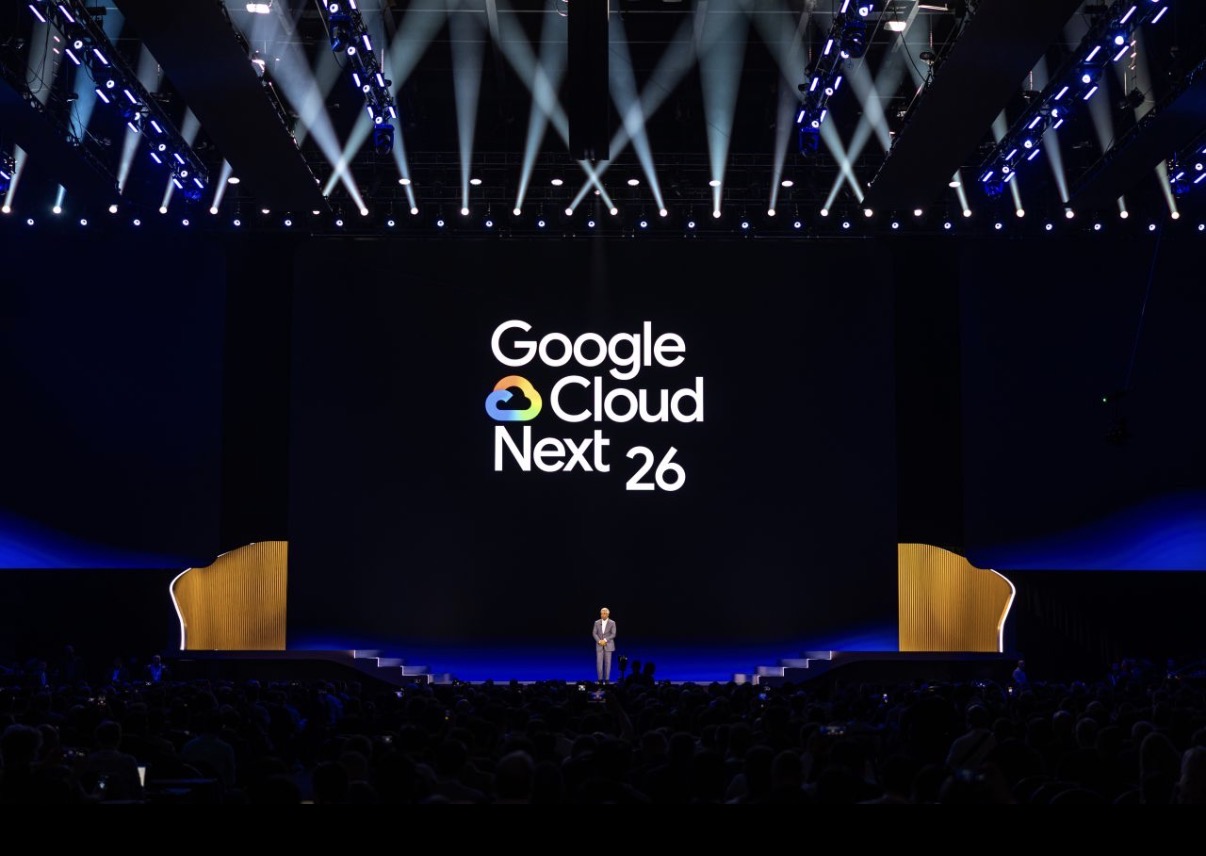
Thomas Kurian opened Google Cloud Next ’26 in Las Vegas with a message that is going to ripple through boardrooms from Sathorn to Silom over the next quarter. The “Agentic Enterprise” is no longer a slide in a roadmap deck. It is shipping, at scale, and Google Cloud has just repositioned its entire stack around it.
If you are a Thai CIO, CTO, or business owner wondering what this actually means for your operations in Bangkok, Chiang Mai, or across Thailand’s industrial estates, this post breaks it down. We cover the major announcements, translate the hype into practical relevance for the Thai market, and share Digigen’s honest take as a Google Cloud Partner working with Thai enterprises every day.
Let’s dig in.
Gemini Enterprise Is Becoming the Operating Layer for Business AI
The big framing from Kurian’s keynote is that Gemini Enterprise is now the front door to AI for every employee and every customer interaction. It is no longer positioned as a chat tool with enterprise controls. Google is calling it the connective tissue between your data, your people, your apps, and your agents.
The proof is in the numbers Google shared. Paid monthly active users grew 40% quarter-over-quarter in Q1. Nearly 75% of Google Cloud customers are now using AI products in production. And 330 customers each processed more than one trillion tokens over the past 12 months.
For Thailand, this matters because the adoption curve we see with our clients mirrors this globally. A year ago, Thai enterprises were running proofs of concept. Today, they are asking how to deploy agents into production without creating security and compliance risks. Google’s answer is a single governed platform rather than a stitched-together stack.
1. Gemini Enterprise Agent Platform: The Real Story
This is the announcement that will affect the most Thai businesses in the next 12 months. The new Gemini Enterprise Agent Platform is built around four pillars: build, scale, govern, and optimize.
Build
- ADK with graph-based multi-agent logic
- Agent Studio for low-code creation
- Agent Registry to catalog agents and tools
- Marketplace integrations across major SaaS tools
- MCP support across Google Cloud services
Scale
- Agent-to-agent orchestration
- Sub-second cold starts
- Long-running agents
- Secure sandboxes
- Memory Bank and Memory Profiles
Govern
- Agent Identity with cryptographic IDs
- Agent Gateway with Model Armor
- Anomaly Detection
- Security dashboard via Security Command Center
Optimize
- Observability with OTel telemetry
- Simulation using synthetic interactions
- Evaluation on live production traffic
Digigen’s take for Thailand
This is a big deal. Most Thai organizations are stuck between two bad choices: hobbyist agent builds on automation tools with no governance, or waiting for legacy vendors to ship something expensive and years late.
The Agent Platform creates a third option: build on a governed foundation with real security controls, and deploy agents your audit team can actually approve. For regulated sectors like banking, insurance, and healthcare in Thailand, the Agent Gateway and Agent Identity features are especially important.
We are already planning pilots with Thai clients to migrate early agent prototypes onto a more production-ready model.
2. AI Hypercomputer: The 8th Generation TPU Arrives
Google announced the eighth generation of its TPUs, split into two specialized chips.
TPU 8t
Built for training. Scales to 9,600 TPUs and 2 PB of shared memory in a single superpod, with major gains in processing power and efficiency.
TPU 8i
Built for inference. A new topology and more on-chip SRAM deliver materially better price-performance for production AI workloads.
- NVIDIA Vera Rubin NVL72 joins Blackwell and Hopper on Google Cloud
- N4A Axion instances offer 100% better price-performance than comparable x86
- C4N and M4N boost network bandwidth per vCPU
- Managed Lustre now reaches 10 TB per second
- Rapid Storage jumps from 6 TB/sec to 15 TB/sec
- Virgo Network introduces a new AI-optimized fabric
Digigen’s take for Thailand
Most Thai businesses are not training frontier models. The more relevant story is inference cost. That is where the business case sharpens.
If you are running customer support agents, document pipelines, or high-volume AI workloads, better inference price-performance directly improves the economics of going live.
Combined with Google’s Bangkok region, Thai enterprises now have a stronger baseline for low-latency and lower-cost production AI.
3. The Agentic Data Cloud: Where Data Becomes Agent-Ready
Google is restructuring its data platform around a new assumption: agents, not just humans, are becoming primary consumers of enterprise data.
- Cross-Cloud Lakehouse on Apache Iceberg with zero-copy integration across major platforms
- Lightning Engine for Apache Spark with stronger speed and price-performance
- Data Agent Kit for Gemini-powered authoring in notebooks, IDEs, and terminals
- Knowledge Catalog to create a dynamic context graph of the business
- Deep Research Agent connecting structured and unstructured BigQuery data
Digigen’s take for Thailand
This is where Thai enterprises often get blocked. Data is scattered across on-prem systems, local ERPs, spreadsheets, and old databases.
The Cross-Cloud Lakehouse and Knowledge Catalog reduce the need for a giant migration before useful agents can go live. You can keep data where it is, wrap it in business context, and let agents query it more safely.
For regional Thai groups operating across Southeast Asia, that flexibility is especially valuable.
4. Agentic Defense: Security for an Era of AI Attacks
Google is pushing hard on AI-powered security, combining Google Threat Intelligence, Security Operations, and Wiz’s cloud and AI security platform.
- Dark Web Intelligence for exposure profiling
- Threat Hunting Agent
- Detection Engineering Agent
- Wiz AI Application Protection Platform
- Wiz Red, Blue, and Green Agents
- Google Cloud Fraud Defense
- Triage and Investigation Agent with faster alert analysis
Digigen’s take for Thailand
Thai organizations are facing more sophisticated phishing, fraud, and bot-driven abuse. The security story here is not just branding. It is an operational multiplier, especially for lean teams.
For businesses without a fully staffed 24/7 SOC, AI-assisted investigation and detection can materially improve coverage.
One practical note: Wiz remains a separate commercial consideration, so licensing should be part of any planning discussion.
5. Customer Experience and Google Workspace
Two areas received notable upgrades.
Gemini for Customer Experience
- Shopping and food ordering agents
- Support agents and agent assist
- Omnichannel Gateway
- Low-latency multilingual voice
Workspace Intelligence
- AI Inbox and AI Overviews in Gmail
- Ask Gemini in Google Chat
- More agentic Docs, Sheets, and Slides
- Google Drive Projects
- Workspace agent for cross-app tasks
- Faster Microsoft 365 migration
Digigen’s take for Thailand
LINE remains the dominant channel in Thailand, and that is a real local consideration. For many Thai consumer-facing businesses, an extra integration layer will still be needed.
On the Workspace side, the migration improvements are especially interesting. For organizations actively comparing Google Workspace and Microsoft 365, the decision framework just changed.
6. Regulated Industries and Openness
For Thai banks, insurers, and government agencies, this is important: Google is supporting Gemini 3 models in both air-gapped and connected environments. Combined with sovereign cloud options, that removes one of the last major blockers for highly regulated deployments.
Google also doubled down on openness. Claude models are available on Vertex AI alongside Gemini, giving customers more freedom to mix models without being locked into a single vendor path.
What Thai Enterprises Should Do in the Next 90 Days
- Audit current agent experiments. If you already have prototypes on Make, n8n, or raw LLM APIs, plan the migration path toward a more governed production model.
- Start your Knowledge Catalog. Structure the context around your data before you scale agents.
- Evaluate inference cost now. Benchmark your current workloads against newer infrastructure and model options.
- Revisit the Workspace decision. Whether you stay or migrate, the comparison with Microsoft 365 has changed.
- Treat agentic security as core infrastructure. Detection, response, and fraud defense should be piloted early, not later.
Final Thoughts
Google Cloud Next ’26 is the clearest signal yet that the enterprise AI conversation has moved past “should we use this” to “how do we govern this at scale.” For Thailand, that timing is actually helpful. The tools are maturing just as more enterprises are becoming ready for production deployments.
At Digigen, we help Thai businesses design, deploy, and govern Google Cloud, AI, and productivity solutions. If you want a pragmatic view of what matters for your business, we are happy to talk through it.
The Agentic Enterprise is real. The question is whether your organization will lead or follow.
Talk to Digigen
Digigen is a Google Cloud Partner and Microsoft Solutions Partner based in Bangkok, serving Thailand and Singapore. We help enterprises design, deploy, and govern AI, cloud, and productivity solutions.
Contact us at hello@digigen.io or visit digigen.io.
For AI agent consulting work, see The Agentiv.